Coaching & mentoring
Learn it from the man who wrote the book.
Two of them, actually — and performers in twenty-six countries learn from them. But a book can't watch your act and tell you what's wrong with it. Mark can.
Why coaching at all
Almost every ventriloquist you'll ever meet taught themselves.
Dancers have teachers. Musicians have teachers. Ventriloquists have a book, a puppet, and a mirror — and then they go out and repeat the same three mistakes for a decade because nobody who knew better was in the room.
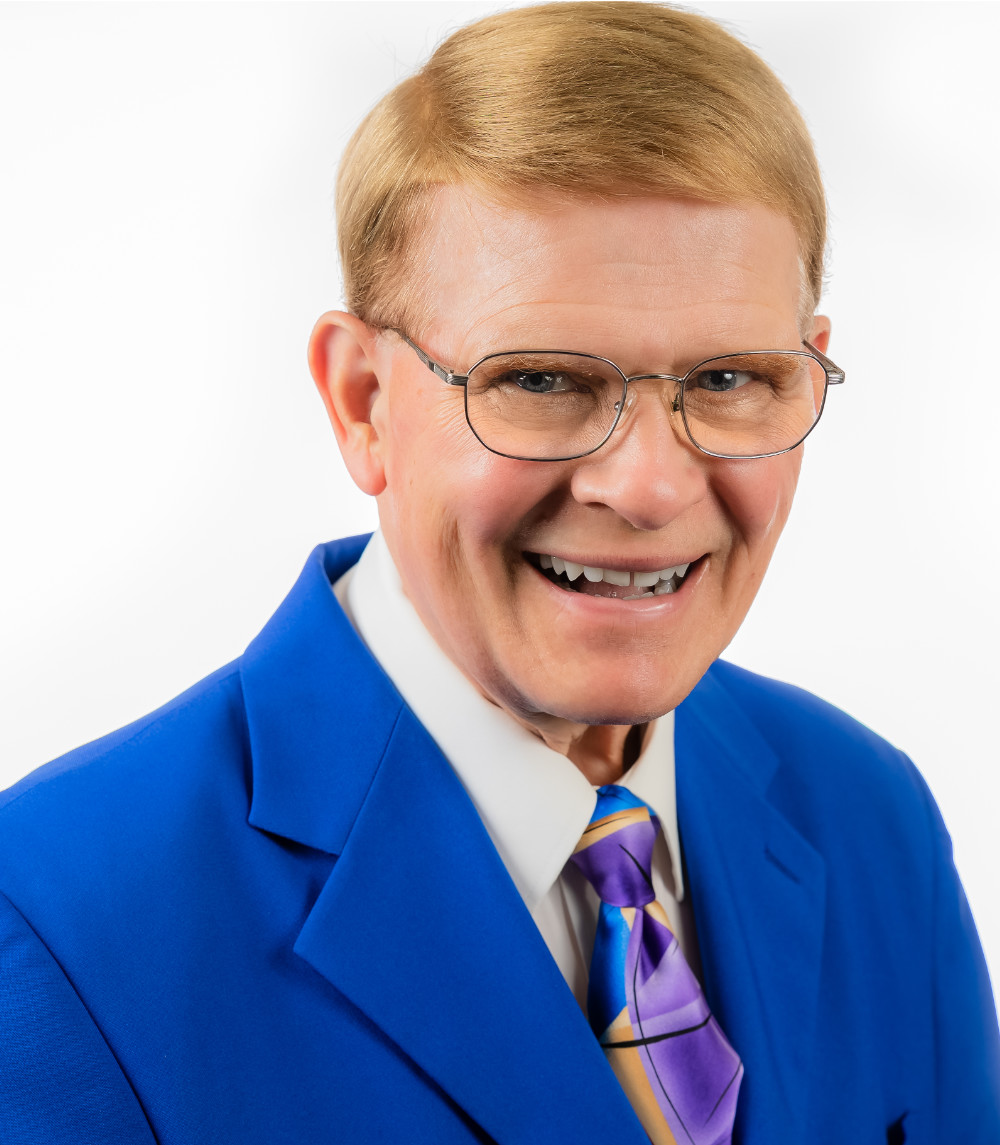
Mark Wade spent forty years as a full-time working ventriloquist. Then he spent twenty-three years as Executive Director of the Vent Haven International Ventriloquists' ConVENTion, which meant that essentially every working ventriloquist on earth walked across his stage. He has watched more ventriloquism, more closely, than almost anyone alive.
He knows what the good ones do. He also knows the exact, ordinary, fixable things that keep everyone else stuck — and most of them are fixable in one conversation.
“Show ’em that they are more than a comedian with a puppet… In other words, it's important to be a ventriloquist artist.”
Who Mark works with
Three kinds of people call.
The beginner
You've got the puppet and maybe the lip control, and no idea what happens next. Mark starts at the beginning: sound substitutions, character, voice, and a first routine that actually works in front of people — so your first show isn't a disaster you never recover from.
The working performer
You're getting booked but something isn't landing — the middle sags, the puppet feels flat, the kids get away from you, or you're stuck at the same fee you charged five years ago. This is the fastest work Mark does, because you already have the reps.
Teachers, librarians & ministry
You don't want to be a professional ventriloquist. You want a puppet to hold a room of children, teach something, and not feel awkward. Mark spent his first career as an elementary school teacher. This is exactly his ground.
Mark coaches both adults and young performers.
The work itself
What Mark actually fixes.
- The classical effects. The baby cry. The distant voice. The telephone voice. The muffled voice. Mark's observation from twenty-three years of convention stages is that these largely stopped being performed — including by working professionals, which is why they've become hard to learn from anyone.
- Microphone technique. Mark is emphatic here: the headset mic that everyone now wears quietly makes the distant voice impossible. Where you stand and what you work into changes what you can do.
- Puppet and character choice. The wrong partner will hold an act back for years and the performer almost never suspects the puppet. Picking the figure, building a character an audience believes, and finding a voice you can hold for a full show.
- Pacing and structure. Where the show sags, what to cut, what to move, and how to open and close — the craft Mark learned from kidshow master David Ginn and used for four decades.
- Handling children. Warm-ups, participation, volunteers, and keeping ninety second-graders with you for the full forty minutes. This is a learnable skill and most performers were never taught it.
- Material and comedy writing. Mark writes routines and scripts for other performers, professional and amateur. Bring what you have and he'll sharpen it — or write it with you.
- The business. Pricing, venues, agents, contracts, advertising, when to say yes to a free show, and whether you can really make a living at this. Mark did, for forty years.
- The long career. Stage fright, dry spells, and coming back from the thing that should have ended it. Mark's hands were taken by an essential tremor and he got them back. He is not theoretical about this.
How it works
However it suits you.
Mark keeps this deliberately simple. Tell him where you are and what you're trying to do, and he'll tell you honestly what he thinks would help.
One-on-one sessions
By phone or video. Work on your act, your technique, your material or your business — whatever is actually in the way. Single session or ongoing, whichever fits.
Act review
Send video of your show. Mark watches it the way he watched twenty-three years of convention performances and tells you specifically what to change.
Workshops & lectures
For conventions, clubs, camps, ministry groups and teacher training. Mark has lectured on entertaining children in the U.S., Germany and the U.K.
Script & routine writing
Custom material written for your character and your audience by a working comedy writer who has been doing it for performers for decades.
Credentials, since you asked
Why take advice from this man.
-
1980
International Ventriloquist of the Year
An award whose other holders include Jeff Dunham.
-
1996 & after
Wrote the two standard texts on kidshow ventriloquism
Kidshow Ventriloquism and Kidshow Ventriloquism Encore — in use in twenty-six countries, including a Japanese-language edition.
-
2000–2023
Executive Director, Vent Haven International Ventriloquists' ConVENTion
Twenty-three years running the largest gathering of ventriloquists in the world — roughly six hundred performers a year from across the globe.
-
2013
Reopened Maher Studios and founded the International Ventriloquist Society
With Ken Groves and Tom Crowl — reviving the oldest school of the art, and relaunching the North American Association of Ventriloquists, the body whose journal had put Mark on its cover in 1981.
-
2014–2016
143 published articles on the craft
A weekly column for Maher Studios, plus the KidAbra Journal, the U.K.'s Rubber Chicken and the IVS Spotlight.
-
2024
Named Executive Director Emeritus
Honoured at the ConVENTion for the twenty-three years. Still serves as Senior Advisor and on the Board of Advisors of the Vent Haven Museum.
No pressure, no pitch
Tell Mark where you're stuck.
Describe your act, your problem, or just the thing you can't figure out. Mark will tell you straight whether he can help and what he'd do about it.